
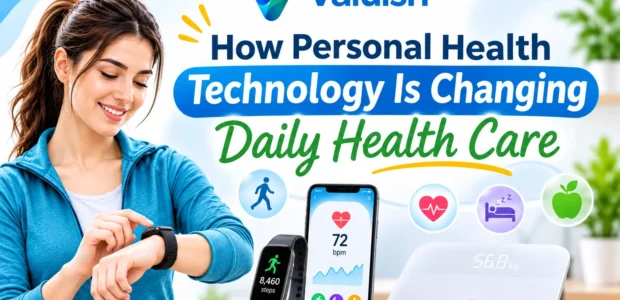

Today, individuals are able to track physical activity, measure some bodily parameters, and gain insight into their activities and patterns through digital health tools and digital applications. With the increased adoption of personal health technology people have additional means to monitor their health-related behaviors and outcomes.
Unlike the traditional methods which may depend primarily on periodic measurement or written records, the modern technology can gather and organise information over the course of time. This information can be made available to the user through various ways, such as using smart phones, wearable devices and connected applications.
Types of Personal Health Technology for Wellness
Wearable health technology includes fitness trackers and smartwatches, which can capture steps, activity, exercise, etc. taken throughout the day. A few devices even include sleep and heart rate monitoring capabilities. These are examples of wearable health technology that make certain health measurements more accessible during daily activities.
Other smart health devices include connected weighing scales, body-composition monitors and devices that are compatible with mobile applications. Personal health technology also enables users to view their measurements, manage the recording of activities and track changes over time. The digital health tools have a range of features and uses, but they all serve a common goal of increasing access and management of selected health information.
How Smart Devices Help People Monitor Their Progress
Personal health technology is used primarily to gather data to understand people’s habits. Wearable health technology such as a fitness tracker can track steps throughout the day, and a connected scale can measure body weight. This data can be accessed by the user using an application and be compared between various time intervals, depending on the device.
This is referred to as health data tracking. People do not need to memorize everything when going through their activity or personal goals; they can access the information that has been recorded. Some health monitoring devices are also able to arrange measurements into charts and summaries, which assists in tracking modifications.
Benefits of Using Technology for Everyday Health
Wearable health technology can make aspects of personal health management more convenient. One of their advantages is the awareness they can inspire. The sleep records, activity during exercise or other metrics may help someone recognize patterns in their sleep.
This can help to ensure uniformity and help with individual objectives. Health and fitness technology can also help remind them and give them a progress report, but this will only work if it fits well into their lifestyle. It is not necessary to go deep into every detail, but it should be done in a way that helps to promote healthier practices.
What to Consider When Choosing Health Technology
The wearable health technology choices will depend on the person’s monitoring goals and usage. If you want to monitor your activity every day, you may need a basic fitness tracker, and for the people who want to measure their body data, then a smart scale that is compatible with your fitness tracker is the ideal option. A comparison of features that are available to those that are needed can help prevent the payment for functions that may be used infrequently.
Another factor to take into account is usability. The set-up of devices should be relatively simple, easy to use, and compatible with other technology. Also, confirm if it will work on a smartphone or not, what data it gathers and whether the device has easy-to-understand specs. Purchase decisions could also be influenced by accuracy claims, battery life, durability and other costs.
Understanding Privacy and Security in Health Technology
Recorded information by the personal health technology and devices can vary from product to product and application to application and may include activity levels, body measurements, sleep-related information, or other health-related information. Users need to know what information is being captured and how it is being disposed of before they log on using an account.
It makes good sense to check privacy policies, app permissions, account security options, and data sharing options. Strong passwords and account protection features can also help safeguard personal information. While it’s convenient, it shouldn’t be at the cost of your personal info getting used without knowledge or consent.
What are the Best Brands for Personal Health Technology
More and more brands are joining the personal health technology device list. One such company is Hume Health which has technology-based products such as smart body-composition scales. These products are applicable to individuals who want to connect their devices to capture specific body data and view it online.
These smart health devices are being used in everyday health routines. Anyone thinking of using such a device should consider its features, compatibility, measurement information and use prior to making any decisions. Those interested in the brand can go to the Hume Health store at Valuish to see what offers are available. Purchasing customers can also search for a Hume Health Coupon Code while checking out their products.
Understanding the Limitations of Health Technology
Some smart health devices can provide easier access to information, but readings should be interpreted in the context of the limitations or constraints of the device. Some products utilize different measurement techniques, and some equipment will have different results depending on the quality of the equipment, how it is set up, and the consistency of the use. Numbers on a screen don’t always give a full picture of a person’s health.
It’s also noteworthy to remind consumers that personal health technology should not replace medical examinations or professional advice. Records of activity and body measurements are helpful as background information, but can’t be used to diagnose health problems or understand all the changes of the body. Readings on a personal device should not be used as the sole basis for making major health decisions.
Making Technology Part of a Balanced Lifestyle
Personal health technology has value largely dependent on its use. The fitness tracker can help someone to focus on their daily activity levels, and the associated app can streamline the ability to track progress towards an activity goal. The tools can be most helpful when they complement realistic routines, rather than be the central element in a person’s health choices.
But good habits such as a balanced diet, physical activity, sleep and taking care of oneself are still critical for living well every day. By using technology mindfully, taking breaks from constant monitoring and establishing healthy routines and habits, people can have a healthier relationship with their devices and their overall well-being.
Conclusion
Personal health technology is fundamentally transforming the way people make and use information about their daily health care. Various technologies enable tracking, reviewing and learning about progress, such as wearable devices and connected scales, or mobile apps. They are useful if the appropriate features are selected and the information interpreted carefully.
With the ongoing evolution of health technology trends, there are increasing opportunities for people to integrate digital health tools into their daily life. Wearable health technology and smart health devices should be used as a supplemental tool, not a substitute for healthy eating habits or professional health care, though. Data privacy, the needs of individuals, and the limitations of the devices they use all come into play, allowing people to make informed choices about the devices they use.
Frequently Asked Questions
1. What is personal health technology?
Personal health technology is defined as the use of digital health tools, connected applications, and other technologies that individuals use to document or monitor specific health and daily behaviors. They can range from fitness trackers to smart scales and health monitoring devices.
2. What are some common examples of wearable health technology?
Common examples include smartwatches, fitness trackers, connected weighing scales, body-composition monitors, and mobile applications that record activity or organize health-related measurements.
3. How do wearable devices support personal health?
Depending on the devices, selected information like steps taken, exercise activity, heart rate, sleep patterns, etc. can be recorded using wearable devices. This information may assist users in monitoring their routines and tracking changes over time.
4. Are smart health devices useful for monitoring progress?
These can be helpful in making observations and noticing patterns in everyday activities. Readings can be different on different devices, however, and are not a full picture of health.
5. How can someone choose the right health technology?
First, come up with what you are interested in measuring; then, look at the features, how easy it is to use, how compatible it is, how limited the measurements are, how private it is, and how much it costs. Use technology that suits your needs, not your desires.